Showing posts with label reviews. Show all posts

Monday, August 29, 2016

Book Review: Literary Listography

I would consider myself a fairly organized person, and as such, I tend to gravitate towards lists. While I have several list apps, I also like and use pen and paper lists. Given this and my love of books, Literary Listography seemed like a natural fit for me.

For those aren't familiar with the Listography books, they are an offshoot of the website and app that encourages users to create and share public lists about anything (you can read about it on the Listography website). Since the first Listography book was published in 2007, there have been 12 books in the series that focus on different themes, including friendship, food, and film.

Picture from Listography.com
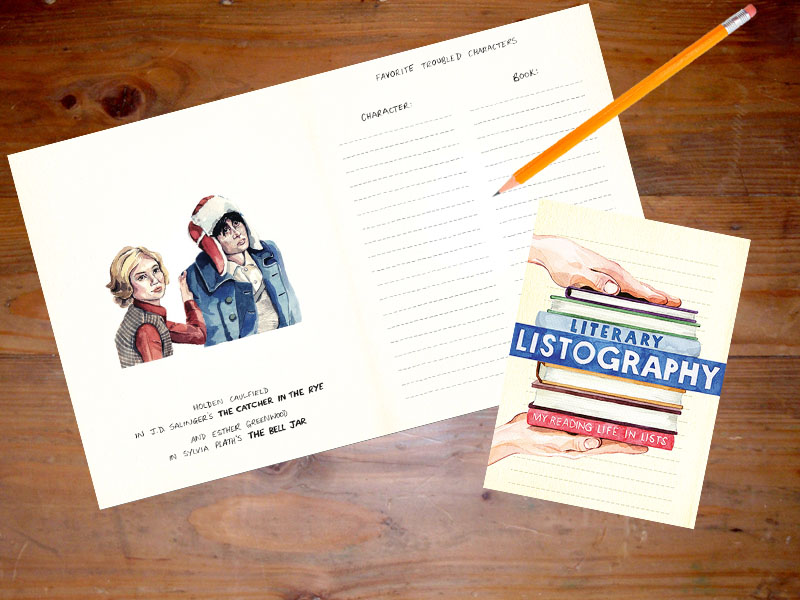
Unlike other books, the Listography books is very much driven and created by the reader, and Literary Listography is no exception. Billed as a "selection of lists chosen just for the book lover," the book includes 70+ lists that are designed to delight and intrigue any bibliophile. Rather than providing you with lists of books to explore, this book relies on you to interact with it and create lists based on the prompts. With prompts ranging from the expected ("My Favorite Authors") to the atypical ("Fictional Crimes I've Witnessed"), this book is fun and thought provoking. Some of my favorite prompts included "Fictional Characters I'd Go on a Date With" (let's be honest - if you love books, you've probably considered this. For the record, my list includes Gilbert Blythe from the Anne of Green Gables books), "Cultures I've Immersed Myself in Through Literature," and "Words I Love and Hate the Sound Of."

Besides the great list ideas, Literary Listography had a number of features that I appreciated and that added to the experience. Each prompt is accompanied by a full-color picture depicting a book related to the prompt it faces. For instance, a picture of a backpack and hiking books symbolizing Cheryl Strayed's Wild goes with the prompt "My Favorite Memoirs and Autobiographies." Besides this, the physical features of the book make it a pleasure to use. The pages have a nice weight and texture that hold up to even fountain pen ink and resist smudges, and the book pages lie flat, which makes it easy to write inside.

If  you are looking for a book to help you record your reading life and thoughts, Literary Listography could be the perfect book for you. It would also make a great gift for the book lover in your life (just be prepared for him or her to become preoccupied by it).

Monday, August 8, 2016

Book Review: "Defying the Nazis: The Sharps' War"


Following any of the horrific events that have become all-too-common in modern society, someone on social media inevitably shares Mr. Rogers’s advice to “’Look for the helpers. You will always find people who are helping’… I am always comforted by realizing that there are still so many helpers – so many caring people in this world.” These words are true, but after so many tragedies and so many Facebook posts, it becomes easy to dismiss or forget about them. Artemis Joukowsky’s Defying the Nazis: The Sharps’ War provides clear proof of the veracity of this sentiment. The book tells the true story of Waitstill and Martha Sharp, who took on the enormous task of helping refugees in Europe as the Nazis were coming to power and World War II was starting. It is also the companion book to the Ken Burns documentary that will be airing on PBS in September.

While the Sharps seemed like an ordinary couple, they had an extraordinary sense of duty that led them to accept the mission put forth by the American Unitarian Association to go to Prague, Czechoslovakia on the eve of the Nazi invasion. Despite having two young children, Waitstill and Martha go to Prague, learn ways of circumventing the obstacles in their way, outwit the Gestapo, and work to help those who are being oppressed and hunted by the Nazis. After leaving Prague and having a short sojourn at home, they return to Europe during World War II to continue helping those they can.

In many ways, this story seems too fantastic to be true, but Joukowsky, who is the Sharps’ grandson, does an excellent job providing research and facts as support. In some instances, the number of names, dates, and references can weigh down the narrative, but the text’s focus never wavers for long. Joukowsky’s writing style also does not veer far away from the facts. If it is not verified in Martha and Waitstill’s correspondence, excerpts of which are included, or through his interviews with him, the text takes pains not to dramatize the events. This helps further establish Joukowsky as a trustworthy author, but it also can make the narrative a little dry, which is surprising given the suspense that is built into the story. However, despite these minor issues, the book moves quickly and leaves the reader wanting to find out what happened to the Sharps. Additionally, there are places where the straightforward narration works to the book's advantage. The description of the Nazi invasion of Czechoslovakia is especially sobering; any further dramatization would have detracted from the horror of the event.

Another aspect that reinforces the book’s reliability is that Joukowsky examines some of the more everyday facets of the Sharps’ lives. A prime example of this is the tension that exists between the good that Martha wanted to do by helping refugee children and the fact that she did this at the expense of spending time with her own children. Also, rather than closing with the Sharps’ second mission to Europe, Joukowsky follows them post-World War II, as they grow further apart both literally (Martha did a lot of travelling on the lecture circuit, while Waitstill returned to Prague to work for the American Committee for Relief in Czechoslovakia) and figuratively and after their marriage ends. In a perfect world, their bond would have been galvanized by the shared experiences in Europe and would have remained strong. Joulowsky’s exploration of its disintegration reinforces the reality of this story; it is not a fairy tale or fable but the story of two seemingly ordinary people who were able to accomplish extraordinary things under great duress and in the face of seemingly insurmountable obstacles.

All in all, Defying the Nazis is a worthwhile and important book. Besides providing the Sharps with the attention they so richly deserve for their heroic actions and showing the personal cost that can come with such actions, it also illustrates how people can rise to the occasion. In short, it is another reminder for us to look for the helpers.

Wednesday, October 21, 2015

Book Review: "The League of Regrettable Superheroes"

I’m not a comics expert, but I have a great affinity for reading about comic books of years past. One of my favorite aspects of reading about these books is the often well-intentioned but ridiculous missteps that have occurred, such as an entry in the Superman universe that Glen Weldon gleefully (and affectionately) recounts on the NPR site where Jimmy Olsen travels back in time and starts a Beatles craze in ancient Judea. “The League of Regrettable Superheroes” by Jon Morris is dedicated to celebrating the wacky hijinks and preposterous storylines of yesteryear. However, rather than focusing on the missteps of well-known series, Morris’s book focuses on lesser-known and less-successful superheroes. Some have dubious origins (Captain Tootsie, a superhero/advertisement for Tootsie Rolls) while others seem to have been designed to take advantage of a trend popular at the time (Morris points out that Magicman, which debuted in 1965, was an attempt to cash in on shows like “Bewitched” and “I Dream of Jeannie”). In almost all cases, the superheroes are indeed regrettable, but Morris has palpable fondness for them even as he acknowledges how ridiculous and ill-conceived they are.

The entries are organized into three parts – The Golden Age (1938 – 1949), the Silver Age (1950 –1969, a time that Glen Weldon refers to as The Crazypants Years), and the Modern Age (1970 – present day). Most entries are two pages in length, with a page dedicated to humorously and wryly describing the superhero and the other page featuring lavish color pictures from the comics (a few entries have four-page spreads, with the extra pages consisting mostly of pictures). As a sidebar, Morris includes a few quick facts on each hero, such as the creator and the debut info, as well as some snarky commentary (for instance, The Conqueror’s sidebar includes “Last seen: Moving inexorably toward Berlin”). While the setup might frustrate those who want further information, the format works very well for readers who want a general overview of the comics without too much minutiae to bog down the proceedings. Additionally, the use of full-color pictures throughout the book (in fact, all of the pictures are printed in color – Quirk does not skimp on the printing or layout) provide further insight into the heroes, as Morris wisely uses his subjects’ inherent insanity and inanity to speak for themselves. These features also make “The League of Regrettable Superheroes” perfect as a quirky and fun coffee-table book.

In short, if you are looking for a serious and in-depth examination of failed comic book characters, then “The League of Regrettable Superheroes” might not be for you. However, it is perfect if you want an entertaining, approachable, and amusing look at unsuccessful or inept attempts at finding the next Superman or Batman.

Tuesday, September 22, 2015

September 2015's PLAY! by Sephora Box

While I can't say that I'm a subscription box addict (my budget won't allow me to be), I do love trying out different boxes. When Sephora announced last month that it was getting in the beauty subscription box game, I figured I would give it a whirl. After receiving my first box, I'm very happy that I did!

PLAY! by Sephora is very similar to Birchbox, Ipsy, and other beauty subscription boxes in its most basic details. Like these other boxes, you signup for a monthly subscription ($10 + tax per month) and get a package of deluxe samples from the brands that Sephora carries in its stores. You also get a PLAY! Book with information on the different products as well as a PLAY! Pass that, according to the box's FAQ page, you can "redeem in store for a free one-on-one learning session with a beauty expert." My PLAY! Pass also says that I can redeem it to get 50 extra Beauty Insider points with purchase (depending on your thoughts regarding Sephora and the entire "Epic Rewards/Epic Fail" debacle, your mileage on whether these points are worth anything may vary).

Based on what I've seen online, I don't think that there is much (if any) variation in the boxes, which can be both good and bad. While Birchbox gives subscribers sample choice and has them fill out surveys so that the boxes can be tailored to preference and style, it seems like Sephora's boxes all contain the same products. Since I've had mixed experiences with Birchbox personalizing my products (I tend to get shampoo with sulfates, which I can't use because I glaze my hair, and foundations that are much, much too light), I'm actually happy to get the same products as everyone else since this helps mitigate the frustration that comes with getting products that don't work for you and seeing someone else get products that you could and would use.

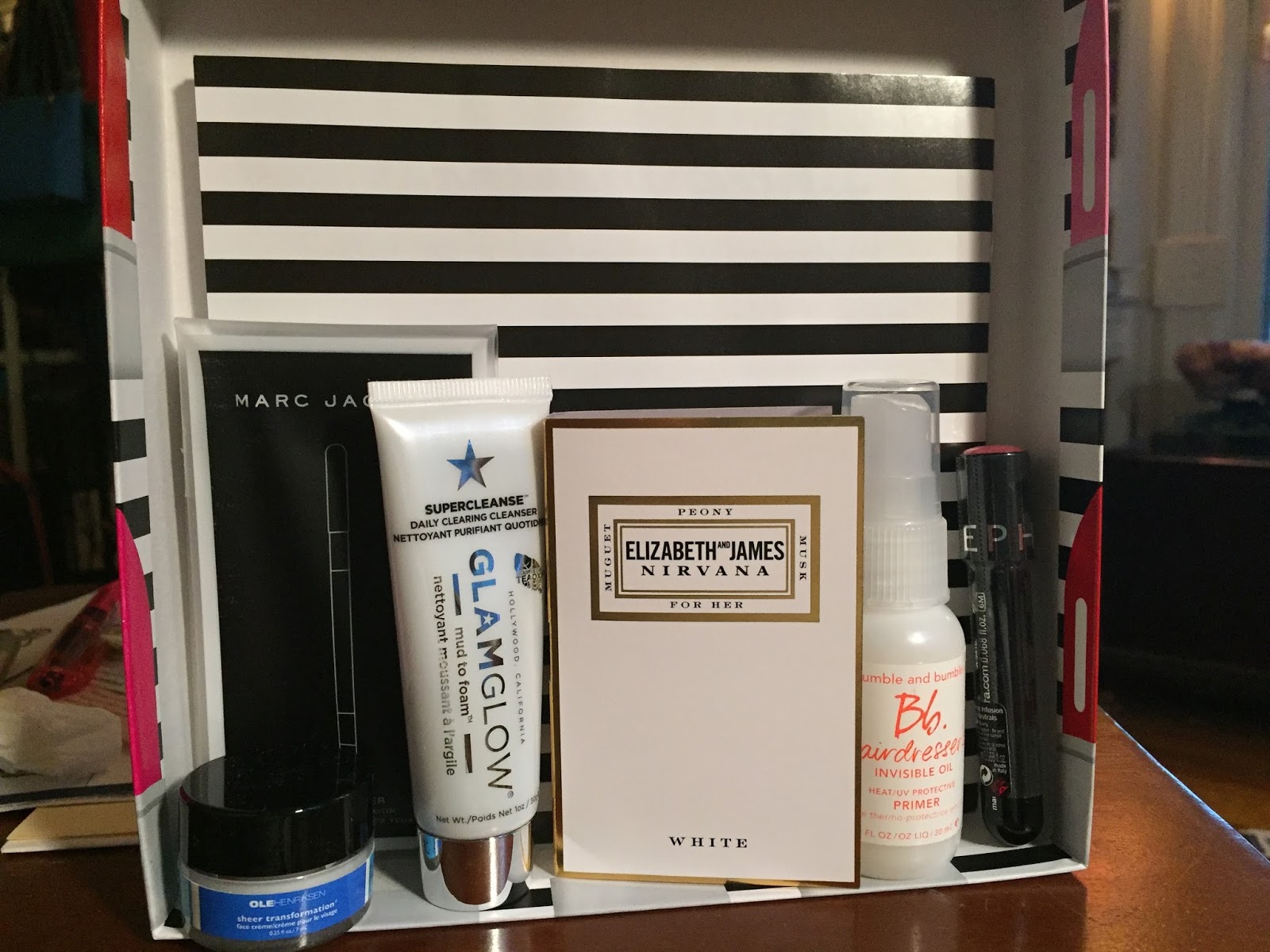
 I received the notice that my box had shipped on the 18th and received my box today (the 22nd), which is a record for me and beauty boxes. It was packaged in a black and white Sephora shipping box. The inner packaging can be seen on the left. The size is somewhere between a Glossybox and a Birchbox, and it is very cute. One thing I'll be interested in seeing is whether Sephora changes the design on the inner box lids. While this is cute, I'd love to see some other colors and designs. The packaging inside the inner box was crinkled paper, which kept the products in place. If I have one complaint about Birchbox, it is that there isn't any cushioning, so I've gotten more than a few damaged products. I don't necessarily see that happening with the PLAY! box.

The products are snug in their bed


My samples were all deluxe-sized, and there was a nice variety to them. They included:
  • The Sephora Collection Rouge Infusion lip tint/stain in Peony 
  • A Marc Jacobs Highliner in Blacquer
  • Ole Henriksen Sheer Transformation face creme
  • Bumble and bumble Haidresser's Invisible Oil
  • Glamglow Supercleanse
  • Elizabeth and James Nircana White perfume (this is a bonus product)

Overall, I really liked the products I received. When I first subscribed, I was a little nervous that the majority of items would be Sephora brand (rather than prestige brands), so I was pleasantly surprised that I received only one Sephora brand product, which I really liked. I particularly appreciate that these are all products I would like to try but aren't ones that I would necessarily purchase on my own. Since one of my hopes when subscribing to a beauty box is finding something new that I would like, I consider this a success.

Additionally, I found the PLAY! Book to be informative. I typically don't pay too much attention to the info sheets or booklets included with subscription boxes, but this one had some helpful information, such as how to use the products in unusual ways (for instance, you can use the Marc Jacobs Highliner to tint light-colored lashes and the Bumble and bumble oil primer to tame brows and moisturize nails). The book is also supposed to be scannable, meaning that you can scan the product pictures with the Sephora smartphone app to get additional information.

All in all, I'm very pleased with the box, and I'm looking forward to next month's. If you have any questions or thoughts regarding the box, please feel free to share in the comments section.

Monday, June 22, 2015

The 2015 Tony Awards: The Host & Best Musical Nominees

The 2015 Tony Awards were earlier this month, and while I came in knowing very little about the shows, I found it to be a mostly entertaining night. While there were some egregious missteps (flat jokes, problematic musical numbers, the deeply awful "In Memorium" presentation), overall, it was an entertaining and enjoyable night celebrating theater. While there are some great play-by-plays and reviews online (The New York Times always has a great Tonys section), I wanted to add my thoughts to the ones already out there. So, let's rewind to earlier in the month and relive the great and not-so-great moments.

The Hosts - I have to admit that I'm torn about Kristin Chenoweth and Alan Cumming. On one hand, they brought a lively sense of irreverence to the proceedings. At their best, it was a little like watching the Tonys with your two snarky, opinionated theatre friends who mock everything but in a loving and joyous way (as opposed to a bitter and angry way). For instance, watching Alan Cumming plug Josh Groban's performance for 90 minutes or so was funny because it was obvious that Cumming thought the constant reminders were obnoxious. I also enjoyed the little musical interludes that the hosts did before the commercial breaks.

However, there were times when the hosts (or the writers or both) went too far and the jokes landed with a thud or failed to launch at all. Case in point: After an amazing performance from Fun Home (more on this in a moment), the audience was treated to a lame E.T. joke. As Dave Itzkoff at the Times put it:

Let this be a lesson that sometimes less is more and that, if you are going to do a lame joke, then at least plan to do it after a crappy performance.

The Best Musical Nominee  Numbers
Fun Home - For most people, this was THE number of the night. Sydney Lucas, who plays the youngest version of Allison, showed some major acting and singing chops in "Ring of Keys." While this number doesn't seem like an obvious one for a Tonys telecast (most shows went for big, splashy, and fun production numbers), it was perfect.

Something Rotten! - While it was very meta (the song is all about musicals and the sometimes preposterous tropes and conventions they contain), it was a nice way to kick off the night. Also, anything that mocks Les Miserables gets a pass in my book.


The Visit - It is always nice to see Chita Rivera performing, especially when she is performing Kander and Ebb. Sure, it was befuddling (Chita is dancing with a younger version of herself, and according to those who have seen the show, the men in masks are supposed to be eunuchs), but it's Chita and Kander & Ebb.

An American in Paris - I don't know why, but I have an unexplainable animosity towards this show. I think that part of it stems from the fact that it (according to all accounts, rightfully) bested On the Town in the choreography category, but the Tony number it selected didn't endear it to me either. It was the perfect example of why medleys don't usually fare well in this venue. It was overstuffed and rather confusing (if you didn't know anything about the show, this probably wouldn't help you).


Friday, September 19, 2014

September 2014 Birchbox

While I've tried many subscription boxes, the only one I've consistently been subscribed to is Birchbox. It manages to hit the sweet spot when it comes to products (a nice mix of high-end and drugstore brands), product sizes (which often include deluxe-sized samples and sometimes even full-size products), and price ($10 a month). Better still, the company continues to refine its products, services, and subscriptions, and I've been loving the options that subscribers can choose to receive. This month, subscribers could either select the regular box or the guest editor box curated by the fashion site Fashionista. I opted for the Fashionista box, and this is what I received:

My box included (from left to right):
  • A sample of Laura Mercier Full Blown Volume Supreme Mascara (full-size $24.00)
  • A deluxe sample of Naobay Body Radiance Lotion (full-size $24.00)
  • A deluxe sample of dr. brandt pores no more vacuum cleaner (full-size $45.00)
  • A travel-size bottle of Macadamia Professional Flawless Cleansing Conditioner (travel size $15.00, full-size $33.00)
  • A Cynthia Rowley Beauty Silver Eyeliner (full-size $16.00)
I'm very happy with the products included, and I LOVE the fact that there wasn't a foil packet or a perfume sample in the mix. I've tried the mascara, and it is fine. While I don't like it as much as some of the other mascaras I've tried, I appreciate having the chance to try it without having to buy the full size. I don't wear a lot of eyeliner, but the product will be perfect to put in my giveaway box. In terms of the products I haven't tried yet, I'm especially intrigued by the cleansing conditioner. I wash my hair everyday, and I'm hoping that the cleansing conditioner might be a viable every-other-day alternative to shampoo.
 
If you got a September Birchbox, I'd love to hear about which box you picked and what you thought of your products in the comments below.


Friday, September 5, 2014

Revisiting Smash a Year after its Demise

Many, many things of note happened while I was taking a break from the blogosphere, and one of the most interesting (at least to me in relation to this blog) was the strange creature that was Smash. When it was first announced, people were taken with its solid pedigree from both the film/tv (Stephen Spielberg! Anjelica Huston! Debra Messing!) and theatre (Marc Shaiman and Scott Wittman! Theresa Rebek! Megan Hilty!) worlds, and its premiere opened to a lot of fanfare and some solid reviews. However, almost from the beginning, the show was plagued with numerous problems in front and behind the cameras.

A lot has been said about the rise and fall of Smash, including an intriguing behind-the-scenes look by Marc Shaiman, the insightful and delightfully dry review by The New Yorker’s Emily Nussbaum,  and a series of recaps from The A.V. Club, the latter of which includes the wonderfully snarky (and accurate) summation of the series as a “long parade of talented people and Katharine McPhee realizing the show with such promise they signed on for has become… this.” Given all of this and the fact that the show lasted a mere 32 episodes, it seems like everything that needs to be said about Smash has been said. However, thanks to the magic of YouTube and its “Watch It Again” section, I found myself revisiting some of Smash’s highlights and lowlights, which got me to thinking about the show as a whole.


One of the issues with Smash is that it often garnered the wrong kind of attention, especially near the end of its brief tenure. After a thrilling pilot, which culminated with Ivy (Megan Hilty) and Karen (McPhee) vocally duking it out with the rousing “Let Me Be Your Star,” the show made a series of missteps that alienated its natural fanbase (theatre people). The characters lacked subtlety and consistency, deus ex machina seemed to happen every week (Grace Gummer comes to help her mother [Anjelica Houston] see the error of her ways before going off to count trout or salmon or something), and even the most basic plot points and details seemed ridiculous. By the show’s end, the small audience that remained mostly consisted of hate-watchers who wanted to comment on Karen’s awfulness or Julia’s (Messing) questionable scarf choices and annoying son. In all honesty, reading the recaps and forums at places like the departed Television without Pity were much more entertaining and lively than anything depicted in the Smashverse.

However, thinking about the show and watching clips a year after it ended has been an enjoyable experience. Yes, the show is still deeply flawed, and yes, Karen/McPhee continues to be its weakest link, a distinction that is impressive since the show had so many problems. However, minus the animus and the derisive, if often deserved, commentary surrounding the show in its death throes, Smash is indeed entertaining in a non-ironic way. There are some very good performances that transcend the terrible character development; Hilty, Messing, Jack Davenport, Houston, and even Jeremy Jordan, who was saddled with a character that seemed custom-made to be awful, did the best they could with what they were given. Hilty, by far, was the highlight of the show, and she was able to give Ivy dignity despite the character’s whiplash-inducing turns. The other aspect of the show that truly stood out to me upon rewatching the clips was the musical numbers. There were some stinkers, to be sure (I had a very hard time connecting to Hit List, a show whose dislikable characters rival the ones found in Smash), but many of the songs are quite good. Shaiman and Wittman’s contributions, including the Bombshell songs and the wonderfully campy “A Thousand and One Nights” (ignore McPhee's contributions and concentrate on Raza Jaffrey and the rest of the cast), stand out. The second season brought some stellar numbers from Andrew McMahon, Joe Iconis, and Pasek and Paul. Even when the show’s plot was cause for secondhand embarrassment, the musical numbers, for the most part, were interesting and sometimes even excellent.

A great deal of blame has been heaped on McPhee, and she (or at least her character) was a major part of the problem. While people formed factions along party lines (Team Ivy or Team Karen), the issue of Team Karen was the Karen was very difficult to root for. Set up as the person that the audience was supposed to identify with and want to see succeed, Karen ended up being not the likable everywoman or even a flawed if ultimately sympathetic protagonist but an object of scorn who managed to be both insipid and incredibly unpleasant. McPhee isn’t blameless when it comes to Karen’s awfulness, but she also isn’t entirely at fault. Although another actress (Laura Osnes, a true Broadway ingénue who also got her break from reality television, was considered for the role and would have been a better fit) could have brought out Karen’s more likable characteristics and perhaps even a sense of genuine goodness and vulnerability, the writing for the character undermined the ultimate goal of making her relatable. As Nussbaum cogently puts it in her article, Karen is a “human humblebrag” and “a one-note character [who McPhee] then took… down a half-note.”

McPhee’s acting chops are decidedly not up to the job of transforming Karen from a passive-aggressive Mary Sue to an actually likable character, but that isn’t the only problem at work. Despite Smash’s attempts to tell us that Karen is the most awesome, most special, most talented actress ever to appear on the Great White Way, McPhee doesn’t have the incandescent sparkle needed to match the rapturous praise her character receives in heaps. She also suffers by comparison to Hilty and the head-to-head competition between Karen and Ivy that is dictated by the script. In most cases, Hilty wins hands down. However, this isn’t to say that McPhee is untalented; there are moments where she did an okay job with Marilyn (please don’t throw things at me), and numbers like “Public Relations” show moments of the sparkle that the other characters constantly attribute to Karen. Unfortunately, this small glimmers do not an entire character make.

Over 365 days and 1,000+ words later, I’m still awed and entertained by the rapid rise and fall of Smash. The awe comes from the fact that such a talented group of people was able to assemble and make a television show about musical theatre in the first place, and the entertainment comes from both the show’s better moments and the enmity it inspired in its implosion. However, despite hindsight being 20/20, moments of Smash remain thrilling. With that in mind, I’m ending with two more of my favorite moments:
 
Yes, this is a little too "Up with People," especially since the song is about suicide, but I enjoy this version of song a great deal. If only the rest of Hit List were as raw and energetic as this.

It was a toss-up between "Let's Be Bad" and "The National Pastime" for this slot, but Hilty has so much great subtext in this number that it wins.

Thursday, August 21, 2014

Birchbox for CEW 2014 Prestige Headliners and Mass Appeal Boxes

While I try to keep my Birchbox purchases in check, I decided to take the plunge and buy the two limited edition Cosmetic Executive Women (CEW) Insider's Choice boxes.What drew me to the boxes is that each product was a finalist in the awards and that the products came from both drugstore and prestige lines. The price of the boxes are $18.00 for the Prestige box and $12.00 for the Mass Appeal one, but you can snag both for $28.00 total if you order them at the same time (no discount code needed - the money is taken off when you checkout). You can also use Birchbox points towards the boxes, and you can use other coupons for additional discounts!
The contents of the Prestige Headliners Box (l to r): Fekkai Glossing Creme, Josie Maran Pure Argan Oil, 100% Pure Nail Polish, Coola Environmental Repair Plus, Philosophy Miracle Worker Overnight, and the toe separators
The Prestige Headliners Box, $18.00, contains brands and products you'd find at Sephora or department stores like Nordstrom or Dillards. These products include:
  • 100% Pure Creamy Nail Polish in Jam (full size)
  • Coola Environmental Repair Plus Radical Recovery After-Sun Lotion (deluxe sample)
  • Fekkai Brilliant Glossing Creme (a very generous deluxe sample)
  • Josie Maran Cosmetics 100% Pure Argan Oil Light (deluxe sample)
  • Philosophy Miracle Worker Overnight (deluxe sample)
The Prestige box also had two lifestyle extras - a pocket mirror and toe separators. In truth, I could have done without these two freebies. That said, I'm so excited about trying out the products in this box since, besides the glossing creme, I haven't used them before.

The contents of the Mass Appeal Box (back row l to r): L'Oreal Butterfly Mascara, Simple Protecting Light Moisturizer, (in front, l to r): Vaseline Lip Therapy, Dove Body Wash, Burt's Bees Lip Gloss
 The Mass Appeal Box, which cost $15.00 on its own, includes brands that you'd find at the drugstore or at retailers like Target or Walmart, including:
  • Burt's Bees 100% Natural Lip Gloss in Spring Splendor (full size)
  • Dove Go Fresh Restore Body Wash (deluxe sample size)
  • L'Oreal Paris Voluminous Butterfly Mascara (full size)
  • Simple Protecting Light Moisturizer with SPF 15 (full size)
  • TRESemme Keratin Smooth Keratin Infusing Serum (full size)
  • Vaseline Lip Therapy Rosy Lips (full size)
The products in the Mass Appeal box look great and seem very usable. I'm especially excited about the moisturizer and Vaseline lip product. As an added bonus, all but one of the products are full size!

Sunday, August 17, 2014

August 2014 Birchbox

For August 2014, Birchbox did something a little different when it came to the subscription boxes. While the box was still $10.00 (including shipping), the company decided to expand on its idea from July's box, which allowed subscribers to choose a sample and the color of the sample. For August 2014, the company let subscribers decide decide if they wanted one of two box themes (one was a box with higher-end products, the other box was dubbed the "Everygirl" box and had more affordable samples). With the higher-end box, subscribers could also choose one of the products they wanted to receive.

I opted for the higher-end box, and this is what I got:
From left to right: Key West Aloe lotion, Laura Geller Cool Lids Cream Eyeshadow, Nugg Beauty mask, Neil George Shampoo & Conditioner.
My box included:
  • A deluxe sample of Key West Aloe Mango Moisturizing Lotion (full size is $12.00)
  • A nice-sized sample of Laura Geller Beauty Cool Lids Cream Eyeshadow in Silver Sands (full size is $19.00)
  • Deluxe samples of Neil George Shampoo and Conditioner (full size is $9.00 each)
  • A single-use sample of nugg Beauty Revitalizing Mask (full size pack of 5 is $14.99) - this was my beauty extra
I was very happy with my box choice, and I've been trying out my products ever since I receive the box last week. Right now, I'm most intrigued by the eyeshadow and mask, but I haven't had a chance to use the hair care products yet.

What did you receive in your Birchbox this month? What do you think of the idea of letting subscribers select the type of box they want? Please feel free to leave a comment below! Also, let me know if you want a review of the different products - I aim to please!

Friday, August 15, 2014

Foodie Fridays Review: Graze Boxes

One night, as I skimmed through an issue of Real Simple, I saw an ad for Graze boxes. Graze is a snack subscription box that you can opt to get every week or every two weeks. The boxes, which cost $6.00 each, come with four small trays of snacks, and you can choose to get a Nibble box, where you can get any of the 90+ snacks they offer, or a Calorie Counter box, which features snacks ranging from 50 - 150 calories each.Given my love of subscription boxes (my Birchbox subscription is still going strong, and I've dabbled with trying boxes from Pop Sugar, Ipsy, and Beauty Bar), I decided to broaden my horizons and give Graze a try. I figured that, at the very least, this could give me a healthy and portion -controlled alternative when I was feeling a little peckish.
My latest Graze box, with (going clockwise from the upper left-hand corner) lightly salted popcorn, raspberry coconut muffin mix, cherries and berries dried fruit mix, and booster seeds.

Thursday, October 11, 2012

October 2012 Birchbox

One of my favorite things about the first part of the month is getting my Birchbox. While I've had varying degrees of luck with the products, I'm always excited to get my hot pink package in the mail. This month, some subscribers could opt into a box done in conjunction with goop.com, a lifestyle website by Gwyneth Paltrow. While I'm indifferent to Paltrow, I figured that opting into the goop box would at least get me some high-end products (seriously, there's nothing on that site that isn't ridiculously overpriced).

I received my box earlier this week, and (with one big exception) the products are okay but don't inspire great love or hatred in me. In fact, my reaction to the box is similar to the reaction I have to Gwyneth herself. They are okay, but they seem expensive and overrated.


The box contained four products and one lifestyle extra:
  • A beautyblender, which is an egg-shaped, hot pink sponge that is supposed to apply foundation or tinted moisturizer in a way that mimics an airbrushed application. (a pack of two - $25.95)
  • Chantecaille Brilliant Gloss is a pretty coral/peach color. (full size - $33.00)
  • DDF Wrinkle Resist Plus Pore Minimizer, which is a serum that supposedly "fills in pores and wrinkles for instantly smoother skin. (full size - $85.00)
  • Marie Veronique Organics Anti-Aging Oil, which is supposed to fight wrinkles and improve skin tone. (full size - $80.00)
  • Luna LemonZest bar (my lifestyle extra)
First off, I'm stoked about the beautyblender! Earlier this year, some Birchboxes had the beautyblender, and I was green with envy when I saw this (and I didn't receive one). This is by far the best product in this month's box, and I plan on using it quite a bit. The only concern I have is that, after one or two days of use, I'm starting to see some wear on the sponge. To use the beautyblender, I am supposed to soak it in water and squeeze out the excess so that the sponge is damp. I'm a little worried that all of this squeezing will result in the beautyblender getting worn out before its time.

I've also tried all of the other products, and I like the gloss well enough. However, as someone who would much rather receive makeup products than skincare, I'm disappointed that I received TWO skincare products (and anti-aging products at that!).

All that said, I'm still excited about the beautyblender, and the inclusion of that product makes me feel like the box was worth the $10 price.


Saturday, September 17, 2011

Book Review: "Something's Coming, Something Good: West Side Story and the American Imagination"

When I first came across Something's Coming, Something Good in my local Barnes & Noble, I immediately knew that I had to buy the book. As a theatre junkie and a huge fan of West Side Story, I thought that this book would be a great addition to my library (yes, I do have a musical theatre/theatre subset within my books). After reading the book, I've found that my initial enthusiasm might have been a little premature. Misha Berson offers an interesting and well-written look at West Side Story, but rather than presenting new scholarship or perspective on the show and its creation, the entire book is more as a compilation of previous research and information.

The book examines West Side Story from its origins to its role as a touchstone of American culture. The most engaging chapters come early in the book, as Berson addresses the show's staging, music and lyrics, and choreography. I also appreciated the chapter dedicated to the film version of the musical, which included a list of differences between the movie and the stage show. These chapters are very heavy on the research, but Berson integrates other people's thoughts and ideas in a way that is cohesive and easy to read.

Unfortunately, some of the other chapters suffer by comparison, and several seem like filler added to make the book longer. The most egregious chapters are "The Rise of the Dancer-Choreographer," "Broadway's Youth Musicals," and "West Side Story and the Rise of Juvenile Delinquency." These chapters seem unnecessary and distract from the strong scholarship that Berson brings to the rest of the book. For instance, I'm still scratching my head over the inclusion of the youth musicals chapter. Not only are the included shows unsurprising (Hair, Rent, and Spring Awakening are all mentioned), but the few connections Berson attempts to draw between these shows and West Side Story are obvious at best. These factors, combined with the fact that the chapter is a slight three and a half pages (and one page is a picture), makes me wonder why this chapter wasn't cut altogether. What makes this truly lamentable is that the basic idea (West Side Story's influence on later musicals about teen angst and rebellion) has the potential to be much more interesting than the actual chapter suggests.

Given all of these factors, I do recommend Something's Coming, Something Good, albeit with some reservations. This would be a great resource for someone who has just found the show or for a theatre director who needs to brush up on the show's history and conception. Berson has certainly done her research, and references to previous biographies, books, documentaries, magazine articles, and interviews abound. With all of this information, this book provides a good springboard for those who want to do further research into the show and read the primary sources Berson quotes. There is also a very fun section on references to the show in popular culture, which would be a great way to introduce it to a theatre class.

In short, this book provides a great introduction for people who want to learn more about the show, and it even makes sense as a quick reference guide for those of us who know a great deal about the musical's origins and influence. However, don't be afraid to skip some of the lighter chapters that only have a tangential relationship with the show.

Monday, August 22, 2011

Book Review: "Taken Hostage" by Ranae Rose

Fair warning: This review will have a lot of spoilers after the first two paragraphs. I’ll note where the spoilers begin so, if you want to remain unspoiled, you can stop reading.

It isn’t everyday that a book gives me almost exactly what I expect while also surprising me at every turn, and, in this sense, Ranae Rose’s erotica-action novella, Taken Hostage, is remarkable. While it gave me what I anticipated based on the synopsis as well as my prior experience with romance novels (my guilty pleasure), it did so in an unexpected manner. Unfortunately, this is both a blessing and curse, for the book manages to defy a number of typical genre tropes while still falling victim to many of the stereotypes people associate with romance.

The story set up is familiar: Tiffany, a New York bank teller, finds herself attracted to a handsome stranger who she assumes is a new customer. However, James Elliot is not your typical customer. Upon reaching the front of the line, he holds up the bank, demands that Tiffany fill a pillowcase with money, and takes her hostage. The two of them then drive across the country to escape the police.

Spoilers start here…

This premise alone seems promising if not terribly original. After reading the first few pages, I assumed that:
1. James would have some sort of noble reason for holding up the bank, since modern romance heroes rarely, if ever, do anything this drastic (or flagrantly illegal) without having some sort of rationale that allows us to sympathize with him. At this point, my money was on him needing the money to ransom a loved one (probably a female relative).
2. Tiffany, being a modern, independent heroine, would show her feistiness by defying her captor and trying to escape before learning about his back story and then falling in love with him.
3. The author would somehow mulligan the bank robbery plot at the end, with James being vindicated and allowed to lead a free and happy existence with Tiffany.

However, this is where Rose surprises us. There are no ailing relatives, kidnapped sisters, or even endangered puppies to motivate James’s very illegal actions. He’s doing it for the money, pure and simple, and we find that Tiffany’s bank isn’t the first he has robbed. Also, beyond her initial fear (which is understandable considering that James tells everyone in the bank that he will kill her if they are pursued), Tiffany, upon hearing from James that he isn’t going to hurt her, seems quite content to go along with him and opts to stay with him as his partner when he gives her the opportunity to leave. She is also quick to acknowledge their sexual attraction and doesn’t have any angst over wanting James.

This is unexpected and ensures that no one will confuse this book with, say, a Harlequin Presents, but these decisions also highlight the book’s flaws. Although I appreciated that James wasn’t a tortured hero and Tiffany wasn’t a typical feisty or martyred heroine, we don’t know much about them and the little we do know is not positive. While James’s candor about robbing the bank for money should probably be taken as refreshing, it made it impossible for me to root for him. Similarly, Tiffany’s willingness to believe that James means her no harm (she takes his word at face value minutes after he has announced, during the robbery, that he will “blow her brains out”) and desire to screw him six ways to Sunday before even knowing his name firmly made her a too stupid to live heroine without the typical tropes.

You may be asking yourself, “What stereotypes does the book use?” Well, the characters have sex and lots of it, with scenes that are steamy if somewhat ludicrous. One of the first major sex scenes happens in the woods, where the characters get it on while on the run from the police. Adrenaline aside, they take a while to stop even after they hear people approaching. At this point, I was rooting for the police to catch their sorry selves, if only because people this intrepidly stupid (or is it stupidly intrepid) and morally bankrupt shouldn't procreate.

Also, James and Tiffany get their happily ever after once they escape the police and cross the border into Mexico. This might not be such a formidable problem except that Rose ends the book in typical romance novel fashion, with the two of them exchanging “I love yous” on the beach. This falls flat since we don’t see them connect on any real level beyond the sexual. Even if I could ignore the fact that these characters haven’t earned and don’t deserve their happy ending, it is hard to believe that they love each other and will spend the rest of their days blissfully sipping margaritas together.

All of this is not to say that Rose is an untalented writer. She writes a torrid sex scene and keeps the tension of the book going, even when her two main characters seem unconcerned with evading the police. I also can’t help but admire that she avoids trotting out many romance conventions even if she does so to the detriment of the characters. I almost wish she had fully committed to defying all genre expectations and made this book straight-up erotica. A more ambiguous ending with James and Tiffany racing towards the Mexican border while evading the police might have been more satisfying and believable rather the forced and unconvincing HEA.

In short, if you are looking for a hot, if implausible, read filled with lots of sex, then you might enjoy this book. On the other hand, if you are looking for a romance with likable, sympathetic characters developing an understandable relationship with each other, you might want to look elsewhere

Thursday, August 4, 2011

Book Review: "Just My Type"

Type and fonts surround us, but many people give them little thought. Luckily, there are others like Simon Garfield who are not just fascinated by font and typeface but are willing to share their passion with the rest of us. Garfield’s interest and enthusiasm for his subject are evident throughout the book. Furthermore, he does a good job making his explanations accessible and engaging for those who do not share his awareness and knowledge of font.

Just My Type provides a history of typeface and printing starting from Guttenberg up until present day. It also dissects different fonts, such as the much maligned Comic Sans, and provides stories about the fonts and their designers. Garfield also includes lots of graphics and examples from history and popular culture to help illustrate his points, which contributed a great deal to my understanding and enjoyment of the text. In addition to his lively account of the IKEA controversy that arose after the company changed its typeface from Futura to Verdana, I also appreciated his explanations of such issues like the use of period inappropriate fonts (often found in film) as well as the differences between legibility and readability (using the record cover of The Beach Boys’ “Pet Sounds”).

That said, given the myriad of topics included under the general umbrella of font and type, the book can be very uneven, and some chapters undoubtedly will have more appeal to the general public than others. I would have preferred to see more discussion on the use of type in branding and advertising rather than the chapters dedicated to minutiae like the ampersand. However, after the first few chapters, it is easy to go skip around in the book and focus on your interests without sacrificing understanding or consistency.

In a similar vein, the text is sometimes so information-rich that it can seem overwhelming for the typeface neophyte. Though I consider myself a fast and avid reader when it comes to most books, I often found myself reading a single chapter and then taking a break from the book to prevent font overload. Garfield does guard against this somewhat by mixing shorter, lighter chapters with the more dense ones, but even then all of the ideas still seem to mix together.

The final problem and caution I have about the book has nothing to do with Garfield or the actual text and everything to do with the medium. Although I understand the cost-saving measures involved in providing electronic copies to people for review, this is not a book that lends itself well to reading on a device. The number of graphics and the different fonts used make this book almost impossible to read on most e-readers. I tried reading it on my Nook Simple Touch before realizing the incompatibility between the device and the content.

Overall, although this isn’t the type of book I would read on my own, I was very pleased to have the chance to read such an informative and pleasant treatise on font and typeface. For people who are interested in knowing more about font and print, this would be an excellent starting point (just try to get a physical copy rather than an electronic one!).

Full Disclosure: I received this book through LibraryThing's Early Reviewers Program.

Saturday, July 30, 2011

Beauty Review: Birchbox Products from July 2011

Following the awesomeness of my May and June Birchboxes, I guess it was just a matter of time until I got a box that I wasn't crazy about. While I have decidedly mixed feelings about my July box, there were (as you'll see in this review) more hits than misses.

Philosophy Purity Made Simple One-Step Facial Cleanser (full size [8 oz] $20): As I mentioned when I got my box, I had tried and liked this cleanser before. However, I'm glad that I had the chance to try it again, since I had forgotten how great it is. It is very gentle and non-drying, and it does a nice job with regular cleaning on any skin type. It also has a nice, mild scent, making it a good workhorse product to have. Although I haven't used Purity Made Simple in a while, I might go back to it in the fall/winter months.

Nuxe Huille Prodigieuse Multi-usage Dry Oil (full size [50 ml] $29.50): According to the info card that came with my box, this oil is supposed to give you a pretty glow without any slickness or greasiness. It certainly did do that, but I found myself not needing it all that often. This is something that might make sense in cooler weather, but in the summer, the last thing I want to do is to add an additional layer of anything (particularly oil) to my skin. That said, the oil worked well conditioning my cuticles and taming flyaways (use it sparingly!).

Redken Shine Flash 02 (full size [4.4 oz] $17): This product's claim to fame is adding shine to hair. Unfortunately, I couldn't tell any difference in my hair when I used it. I don't know if my hair was just too dark or was shiny enough without it, but this product is not on my "to buy" list.

Zoya Touch Collection Nail Polish in Pandora (full size [.5 fl oz] $8): I really like Zoya polishes, and I had been wanting a sophisticated nude polish (because wearing sparkly purple or blue when teaching is probably not a great idea). This is the perfect summer nude color, and it had pretty decent coverage too (it only took two coats for it to be opaque).

Tuesday, July 19, 2011

Book Review: "The Wilder Life: My Adventures in the Lost World of Little House on the Prairie"

Growing up, I LOVED the Little House books with an ardor that even my eventual alliance with Nancy Drew could not equal. I carried the yellow-bound paperbacks, which I received as boxed set from my aunt, around until they literally fell apart, and I even remember discussing the books with my classmates in the tiny Southern town where I went to elementary and middle school. 

Although I replaced my frayed books with the full-color editions that came out in the mid-2000s, I now have a more ambiguous view of Laura and her books. In addition to the horrible television show (sorry, but it is a ridiculous, preachy, exhausting mess) and the books' discomfiting racial issues, there is also the fact that certain groups, such as extreme right-wing conservatives and super Christians, have seemed to have appropriated the books as their own. Added to Rose Wilder Lane's (Laura's daughter and assistant with the books) libertarian streak and the books' hypocritical view of the government (there is a great deal of anti-government sentiment that conveniently ignores the federal assistance that the Ingalls family received)  I can't look at the books in the same way.

Despite my complicated view of the Little House books, I was excited to read Wendy McClure's The Wilder Life, where the author decides to enter the world of Laura Ingalls Wilder by doing the things that Laura did (churning butter, twisting hay sticks), researching Laura's life, and visiting the places mentioned in the books. On her quest, she is accompanied by her seemingly saintly boyfriend, Chris, who not only reads all of the Little House books but also willingly does things like sleeping in a covered wagon and road tripping to various Ingalls-related sites.

This is a rather slim premise, but what McClure lacks in substance she usually makes up for in style. For the most part, she relays her misadventures with great panache and humor. This is particularly evident in the middle chapters, which show McClure's attempts at cooking recipes from The Little House Cookbook and her road trips to places like Mansfield, Missouri, where Laura and Almonzo lived. A run-in with an "end of days" group at a homesteading skills weekend (she and Chris, worried that the group members will hear them in their tent, write notes to each other to plan their escape) to an experience sleeping in a rented covered wagon are two highlights of the book, for McClure manages to merge the absurd and mundane together to create a comedic moment that, nevertheless, seems real and related to her quest in some way.

I also appreciated McClure's exploration of her conflicted views of the books, their writers and participants, and their legacy. She even tries to understand the viewpoint of Rose Wilder Lane, a divisive figure that many people (even, or perhaps especially, fans of the books) tend to dislike for a number of reasons, including her complicated relationship with her mother and the fact that she blatantly plagiarized from Laura's unpublished memoir to write her own (fictional) novel. Given that McClure could have easily gone the fan girl route while letting her "calico-sunbonnet freak flag fly," I appreciate her candor and her acknowledgement of the less-than-perfect or ideal aspects of Laura World.

The book does drag in places, most notably the opening and the ending. Both sections are more rooted in McClure's personal life and less related to Laura Ingalls Wilder's works, and both address McClure's personal life, specifically the illness and death of her mother. There is also a part where McClure has a mini-crisis while visiting De Smet, South Dakota, which is as puzzling for the reader as it is for her.

This book isn't perfect, but it is entertaining and informative, particularly for those who grew up reading the Little House books. At a mere 249 pages (at least on my Nook), it is a light, quick, fizzy summer read, perfect for taking to the beach or reading on a plane. McClure's ability to weave in information while keeping the prose engaging makes this a supremely enjoyable way to revisit a childhood favorite and a cultural touchstone. It even made me want to embark on my own Laura World adventures, even if they only go as far as dusting off my copy of The Little House Cookbook and making up a batch of apples 'n' onions. 

Sunday, July 17, 2011

Movie Review: "Winnie the Pooh"

In the frenzy surrounding the final movie of the Harry Potter franchise, another childhood favorite sneaked into theaters under the radar this weekend. Disney released a feature-length (if somewhat short) Winnie the Pooh film based on several of A. A. Milne's original stories, and the entire enterprise makes for an enjoyable movie experience, particularly for those little ones who might be a tad too young for the daring exploits of Mr. Potter and his companions. That said, much of the audience in the showing I attended on a warm Saturday afternoon were adults, signaling that the nostalgia and affection for our bear of very little brain transcends age (even if some of us might have felt a little silly going to the ticket desk and asking for the 12:30 showing of Winnie the Pooh).

The 60-minute movie (I told you it was short) has three interweaving storylines involving our favorite silly old bear and his 100 Acre Wood friends. Besides Pooh's usual quest for honey, we also have the search for Eeyore's tail and some confusion over the whereabouts of Christopher Robin (who looks and sounds a lot more British than earlier incarnations). If this doesn't sound like an awful lot to sustain a film, it is because it isn't. However, it is light, fluffy, and very enjoyable. As Roger Ebert noted in his review, it would make the perfect first film for small children, since there isn't anything terribly menacing or disturbing about it. It is just innocent, gentle fun from beginning to end.

The characters are much the same as you remember, even if they seem a little broader and less subtle than they were in the original shorts. My brother and sister found them to be caricatures (for instance, Pooh seems much, much more honey obsessed than he did in other incarnations, which is saying something), but I didn't have this problem. Perhaps it is because my nostalgia goggles were firmly in place, but I had a lot of fun seeing the characters on the big screen.

Perhaps one of the real reasons to see the movie (especially on the big screen) is the animation. Simply put, it is gorgeous and is a fitting tribute to the original Winnie the Pooh films made by Disney. Besides Christopher Robin, all of the characters look much as they always did, and the lush but familiar depiction of the Hundred Acre Woods is beautifully rendered. Eschewing than the creepy, computer-generated characters found in other animated movies and shows (including the terrible My Friends Tigger and Pooh on the Disney Channel), the hand drawn quality of this film makes it that much more enjoyable. Imagine the difference between going to an old-fashioned movie theatre and the multiplex behemoths that most cities have, and that is the difference between seeing a soulless, CGI version of Pooh and this animated version.

The voice actors do a nice job; joining Jim Cummings (the original voice of Pooh) are John Cleese as the narrator and Craig Ferguson as the blustery Owl. The other voice actors are not necessarily people you would have heard of, and that, to me, is an excellent thing. Without having to be dwell on being vocally recognizable to their audience (think of the numerous Dreamworks animated movies that seem obsessed with featuring stars' voices), these actors can slip into the familiarity of the characters that thousands (millions?) have grown up with.

The songs are fun if not super memorable. There isn't anything that comes close to the wonderful Sherman brothers' songs, even though Robert Lopez (of Avenue Q fame) and Kristen Anderson-Lopez do a serviceable job of it. I also wasn't too taken with the Zooey Deschenal cover of the original Winnie the Pooh theme. However, Ms. Deschenal more than makes up for it in the fun "So Long," which plays over the clever ending credits. Do yourself a favor and stay through all of them. They are charming and entertaining without being too wry, and they have some lovely callbacks to the Milne stories. Even my disenchanted brother and sister loved the credits (and thought they were the best part of the film).

If you are feeling fatigued by the Harry Potter hoopla (or, if you are like me, you never really got into Harry Potter in the first place), do yourself a favor and spend 60 minutes in the 100 Acre Wood. Sitting in the back of a theater and seeing little kids clutching their stuffed Pooh bears and watching their friends on the big screen for the first time is a truly magical experience (no broomsticks or Hogwarts required).

Wednesday, June 29, 2011

Book Review: "The Story of Charlotte's Web: E. B. White's Eccentric Life in Nature and the Birth of an American Classic"

From past experience, I’ve found that writing a book about another book’s genesis is very difficult. The resulting works are usually somewhere between interesting but unexplored minutiae or gushy biography. Luckily, Michael Sims manages to avoid both pitfalls in The Story of Charlotte’s Web: E. B. White’s Eccentric Life in Nature and the Birth of an American Classic. Tracing White’s life from his childhood to his tenure at The New Yorker to his writing of Charlotte’s Web, Sims manages to write a deft and thoughtful examination of the author, his writing style, and his curious, and fascinating, relationship with nature.

Although the book certainly has slow patches (the opening chapters in particular seemed to take a while to get going ), overall it is very enjoyable and incredibly detailed. What’s more, almost everything that Sims includes in the book, from White’s hesitancy regarding romance to his experiences farming in Maine, relates to the book’s ultimate focus. While it might not have been entirely clear when starting the book why Sims opted to describe Samuel White’s manner of speech in the early chapters in such detail, the payoff is seeing the parallels between E. B. White’s father and John Arable, one of the characters in Charlotte’s Web. Even more impressive is that Sims trusts his readers’ patience and intellect; rather than dropping early hints about this, Sims presents the information without apology and only mentions the connection briefly when describing the character later in the book.

All in all, The Story of Charlotte’s Web is a fascinating and insightful look at E. B. White and the factors that led him to write Charlotte’s Web. Sims’s account of White’s life and habits is thorough and well-researched, and his writing clearly conveys his affection and admiration for his subject without being obsequious. Fans of White and Charlotte’s Web will undoubtedly enjoy this book and learn more about the work and man who wrote it.

Sunday, June 19, 2011

The 2011 Tonys: Just Because You Try Doesn't mean You Succeed

Since there were only two musicals nominated for "Best Revival of a Musical," I'm going to analyze/snark on the numbers from both the revival musicals and the new musicals in one post. Besides being more expedient (I'm feeling a little guilty for neglecting the Tonys last week), I've found that I didn't have a lot to say about many of the numbers.

The "Best Revival of a Musical" Production Numbers

How to Succeed in Business Without Really Trying
Daniel Radcliffe certainly gave it the old college try when leading the cast in a rendition of "The Brotherhood of Man." Even though I'm not a big Harry Potter fan, I was rooting for Radcliffe to do a good job, and I wasn't disappointed. Although he isn't the best singer, I thought that his performance overall was very charming. He has a nice stage presence and is a surprisingly good dancer. The overall staging of the number was good, even though I'm not the biggest fan of  Rob Ashford (seriously, sometimes less is more), and the entire ensemble had good energy. The exception to this was John Larroquette. I'm not certain if he decided to play his character as being preternaturally bored, but he really didn't seem to be enjoying himself at all. My favorite part is, in the last 30 seconds or so of the number, Larroquette is hidden in the back of the formation to disguise the fact that he isn't a dancer and that he isn't really dancing. This, obviously, does not work.

Anything Goes - The show's title song was performed by the lovely and talented Sutton Foster and ensemble. While there wasn't anything wrong with it per se, it managed to be perfectly adequate without being all that memorable or special. I wonder if my ennui with the number in general stems from its overexposure. I feel like I had seen Foster sing and perform "Anything Goes" numerous times (in rehearsal footage, on the show's site, and on various talk shows). Perhaps Foster was feeling the same, since she was missing her trademark spark.

Best Musical Production Numbers

Catch Me if You Can - After a brief appearance and intro by Aaron Tveit, Norbert Leo Butz led the ensemble in "Don't Break the Rules," which many have cited as the high point of the show. Unfortunately, this doesn't speak that well to the show's merits, since my co-bloggers and I found the number very "meh." Unlike "Anything Goes," I don't fault the performers, since Butz and company are giving it their all. Instead, I think that the song in and of itself is flawed, and no amount of showmanship could have saved it. My favorite thought regarding this number comes from The Craptacular's Twitter feed: "Don't Break the Rules" plays a lot less compelling/exciting when its not preceded by like, 40 minutes of boring sh*t."

Sister Act - I have a soft spot for Sister Act (the movie). While Petina Miller has a nice voice and a great stage presence, she and the rest of the sisters weren't enough to make me forget the excellent ensemble in the movie. That said, "Raise Your Voice" wasn't bad, but I don't know if it would convince people to buy tickets. For me, it made me want to get the movie from Netflix rather than go to New York to catch the show.

The Scottsboro Boys - This number presents a conundrum. On one hand, it was well-written, well staged, and well performed by the actors. However, I have a problem with the fact that the number really, REALLY wasn't all that representative of the show as a whole. I don't know if the producers and the director (Susan Stroman) thought that doing a representative number was less important than showcasing the talents of the cast, but it did come off as very strange. Based on the number, you would think that this would be a lighthearted musical about friendship (trust me, it is not).

The Book of Mormon

The Book of Mormon broke with the trend of the evening (and the trend of most musical numbers performed at any given Tony Awards) by not doing a big ensemble number. In fact, "I Believe" is essentially a solo performed by Elder Price, with some unwitting (and very reluctant) assistance from the Ugandans at the end of the number. While I would have liked to have seen Josh Gads be featured in some way (not only was he not in this number, the camera didn't even cut to him when they were announcing the nominees for "Best Actor in a Musical"), I appreciated the break from big production numbers. Andrew Rannells did a wonderful job being believably sincere and appropriately earnest, and he has a great voice. I also thought that, unlike the Scottsboro number, this song perfectly encapsulates The Book of Mormon. After hearing this quasi-power ballad, you would definitely know what you were getting into if you decided to see this show.